• Members area
Lifestyle Maternity
  • Link to Instagram
  • Link to Mail
  • Home
  • Our Clinic
    • How We Work
    • Our Dietitians
    • Our Partners
    • For Health Professionals
  • Our Services
    • Preconception
    • Pregnancy
    • Postnatal
  • FAQs
  • Resources
    • Free Resources
    • Nourish & Nurture Programs and PeNut Cookbooks
    • Members area
    • Booking Terms and Conditions
    • Disclaimer
    • Privacy Policy
  • Blog
  • Contact
  • BOOK NOW
  • Click to open the search input field Click to open the search input field Search
  • Menu Menu
You are here: Home1 / Nutrition News2 / Blood glucose levels3 / Can what I eat and how I move help my Polycystic Ovary Syndrome?
Blood glucose levels, Diet and Fertility, Fertility, Fruit & Vegetables, PCOS, Preconception, Pregnancy, Weight

Can what I eat and how I move help my Polycystic Ovary Syndrome?
What is PCOS?

Polycystic Ovary Syndrome (PCOS) affects around 10% of Australian women in their reproductive years. This is due to hormonal changes.

This ‘syndrome’ is linked to a range of health issues for affected women, trans or non-binary people. In the short term, those with PCOS may have reduced fertility and difficulty conceiving. In the longer-term obesity, diabetes and cardiovascular disease are more likely for people with PCOS.

Normally the ovaries produce large amounts of the female hormone oestrogen, lesser amounts of the male hormone testosterone, and the pregnancy hormone progesterone (which is only produced in greater amounts after ovulation and during pregnancy). In PCOS, testosterone levels are often mildly increased.

The causes of PCOS are unknown. In some cases, it seems to run in the family whereas for other women the condition only occurs when they are above their most healthy weight.

Women who have PCOS may experience:

  • Irregular menstrual cycles – menstruation may be less frequent due to less frequent ovulation, and may be either heavier or lighter than average.
  • Amenorrhoea – some women with PCOS do not menstruate, in some cases for many years.
  • Infertility – related to less frequent, incomplete or absent ovulation.
  • Increased body hair (hirsuitism)
  • Obesity
  • Acne

There may also be long-term health risks. Recent research suggests that PCOS is related to insulin resistance and the development of type 2 diabetes. Some women with PCOS develop type 2 diabetes, especially if they are overweight.

What is the latest research on PCOS and lifestyle changes?

Recently, new international evidence-based guidelines for the assessment and management of PCOS were released. This large body of work documented results from studies around the world and gives direction for the best treatment steps to take.

A take home message from these guidelines is the important role of ‘lifestyle management’ as the first line of therapy for PCOS and outline the clear benefits that result from a very achievable weight loss and increase in physical activity.

Do I have to get back to my ‘healthy’ BMI range for me to see improvements in my health?

No, the good news is that research shows that achieving a loss of just five to ten percent of your body weight, whatever weight you are at now, has significant effects for fertility and symptom management in women with PCOS. What might this look like? For most women, it is a loss of only 4 to 5 kg. Further health benefits come from greater losses, and are enhanced by increasing physical activity.

How active do I have to be to get health benefits?

A good goal is at least half an hour of moderate-intensity physical activity on most, preferably, all days. You do not have to do it all at once. Your exercise can be spread over the day, in ten minute blocks. Try three ten minute walks, or two fifteen-minute periods of activity.

What does moderate-intensity activity mean? Moderate-intensity means you are exercising at a comfortable pace. A good guideline is the “talk test” – you should be able to maintain a conversation easily without being short of breath.

What happens if I am already in my healthy BMI range?

Maintaining your weight in the healthy range can help prevent symptoms and longer term health risks for women with PCOS. Being a healthy weight is a balancing act: having a good knowledge of nutrition is important, but we also need to understand the reasons for why we eat, how we eat, what we eat, who we eat with and where we choose to eat. Believe it or not, there is a lot more to reaching and maintaining a comfortable weight than counting up kilojoules!

Dietitians are trained to take a key role in assisting women with PCOS to manage their symptoms. Here at Lifestyle Maternity, specialist women’s health dietitians are able to tailor a program to support you to adapt guideline recommendations to your lifestyle and preferences. We look forward to supporting you on your journey to better health and quality of life. For further information book an appointment with a Lifestyle Maternity Dietitian or enrol in an online, self-paced course.


Interested in the new PCOS app that was produced to accompany these guidelines? Check it out here
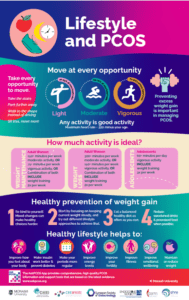
 

 Figure 1. The Lifestyle and PCOS infographic produced to accompany the new PCOS guidelines.


Image credit: Unsplash/Jessica Ruscello

Image description: Sugar snap peas with one pod open, showing three peas.

1 October 2023/by Shelley Wilkinson
Tags: Fertility
Share this entry
  • Share on Facebook
  • Share on X
  • Share on Pinterest
  • Share on LinkedIn
  • Share by Mail
https://lifestylematernity.com.au/wp-content/uploads/2023/10/jessica-ruscello-349304-unsplash-peas-in-a-pod-scaled.jpg 1707 2560 Shelley Wilkinson http://lifestylematernity.com.au/wp-content/uploads/2022/07/Lifestyle-Maternity-logo.png Shelley Wilkinson2023-10-01 06:00:052024-11-04 11:58:22Can what I eat and how I move help my Polycystic Ovary Syndrome?
You might also like
5 eggs in a column Five important things to consider when becoming pregnant after weight loss surgery.
healthy lunch ideas from Dr Shelley Wilkinson Seven Quick and Healthy at-home Lunches
expectant dads' diet during pregnancy study Expectant dads’ diet during pregnancy
Row of five red apples with a grey background Controlling Non Hungry Eating: one piece of the puzzle for achieving your most comfortable weight
Nutrition and fertility foods for preconception How does diet affect fertility?
Tomatoes, cucumbers, lettuce and carrots Why “2 & 5”? – understanding the science that supports our dietary guideline goals for fruit and vegetables

Our latest articles

  • Headline of the new Lancet article about PMOS
    Introducing PMOS … the new name for PCOS13 May 2026 - 9:09 pm
  • Dr Shelley talks about nourishing women
    PODCAST: NOURISHING WOMEN8 May 2026 - 2:13 pm
  • This year isn’t about resolutions—it’s about results. Boost your fertility, thrive in pregnancy, or nail the ‘new normal’ with our January sale offer.30 December 2025 - 12:03 am

Article categories

  • Blood glucose levels (8)
  • Diet and Fertility (18)
  • Dietary Quality (17)
  • Fathers Diet (4)
  • Fertility (18)
  • Food safety (4)
  • Fruit & Vegetables (14)
  • Gestational Diabetes (6)
  • gut health (3)
  • Intuitive eating (5)
  • Leadership in Dietetics (1)
  • Mindful eating (9)
  • Morning Sickness (2)
  • News (1)
  • PCOS (9)
  • PMOS (1)
  • Postnatal (6)
  • Preconception (20)
  • Pregnancy (27)
  • Recipes and Meal Ideas (10)
  • Ultraprocessed foods (4)
  • Weight (14)

Articles topics

anxiety Carbohydrates Dads Diet depression diet DoHAD epigenetics Fertility fetal programming fruit Glycaemic index guidelines health healthy healthy pregnancy lifestyle maternity Lunch Meal Inspiration myths new mum nourishing nutrition nutrition essentials for pregnancy postnatal postpartum pregnancy small group workshop supplements vegetables weight gain

On-demand courses

Simple, affordable programs to help you feel confident making healthier food and exercise choices.

Nutrition resources for Lifestyle Maternity member resources

                   ::CLICK:: TO EXPERIENCE 

Lifestyle Maternity

Empowering our clients through education, resources, and support for optimal fertility, a glowing pregnancy and a happy and balanced first year after birth.

We acknowledge the Traditional Owners of country throughout Australia and recognise their continuing connection to land, waters and culture. We pay our respects to their Elders, past and present.
                                  Australian Aboriginal Flag      Torres Strait Islander Flag

Contact us

PO Box 516
Kenmore, Brisbane
QLD Australia 4069

hello@lifestylematernity.com.au


Find us on

Medical Objects

Telehealth appointment times

Wed: 12:30-14.45

Thurs: 8:15-15:00

Fri: 8:15-12:30

Sat: 8:00-11:00


BOOK NOW
© Copyright 2024 Lifestyle Maternity | Web design by Moonstone Creative
  • Link to Instagram
  • Link to Mail
  • Booking Terms & Conditions
  • Disclaimer
  • Privacy Policy
  • Contact
Link to: The Ultimate Guide to Supplements and Fertility: What Works, What Doesn’t, and What to Avoid. (Hint: it’s probably not what you think…) Link to: The Ultimate Guide to Supplements and Fertility: What Works, What Doesn’t, and What to Avoid. (Hint: it’s probably not what you think…) The Ultimate Guide to Supplements and Fertility: What Works, What Doesn’t,... Link to: Controlling Non Hungry Eating: one piece of the puzzle for achieving your most comfortable weight Link to: Controlling Non Hungry Eating: one piece of the puzzle for achieving your most comfortable weight Row of five red apples with a grey backgroundControlling Non Hungry Eating: one piece of the puzzle for achieving your most...
Scroll to top Scroll to top Scroll to top
Bite-sized ...

Get 10% off “Nutrition Essentials for Fertility” and “Nutrition Essentials for Pregnancy” with the code WELCOME10 at the checkout.

Have a nibble now … designed to transform you easily from WANTING to change to making habits STICK.